On the hunt for a Klokkestreng
Finding a Nordic bell string became my thrifting goal
A weekend trip to Røros a few months after moving to Norway led me to become slightly obsessed with finding a tapestry to take home like the ones found on the walls of the hytte (cabin) where we stayed. The tapestries in the cabin were hand woven and mounted on a decorative iron hanger. They gave the cabin a very koselig (cozy) feel that I wanted to bring to my home in the future. And so, the hunt for my very own traditional Nordic woven wall hanging began.
After some recent research, I now know these wall hangings are called klokkestreng (bell string/bell call) and originally had a very practical use. The tapestries were generally just a string, ribbon, or strip of cloth attached to a lever that would ring a bell when pulled. They were not the beautifully woven designs we see hanging on cabin walls today. It was essentially a manual doorbell before electric doorbells were common. The more decorative bell strings were used for indoor bell ringing when needing to call the attention of someone inside like a servant. These decorative bell strings were therefore found in more affluent homes.
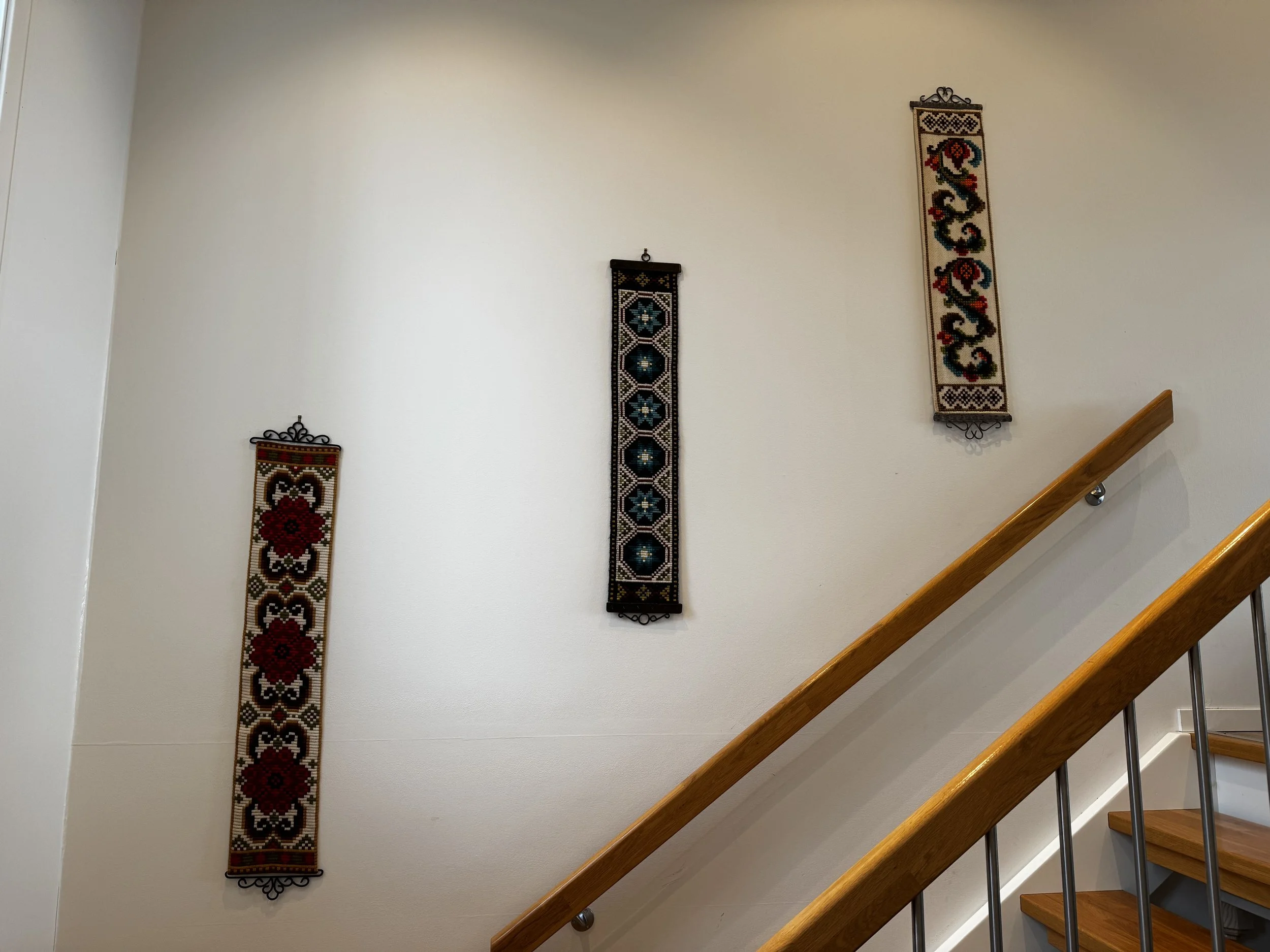
The bell strings we see throughout Scandinavia today have a purely decorative purpose. They also feature thick wool yarn and wrought iron hangings as opposed to the thinner string and brass metalwork seen in the more expensive, upper class designs of the past. While bell strings lost their original practical purpose, they became a popular crafting hobby in the 1960s and 70s and are still made by some today.
As I mentioned before, I became slightly obsessed with finding my own bell string after our trip to Røros. Lucky for me, one of my friends here is fond of thrifting and found all of the best thrift stores between Brekstad and Trondheim. I turned to her for guidance and was able to find three tapestries of my own, along with one more that she gifted me. I’ve been able to find a nice little collection of klokkestrenger to hang on the walls of our future home and to give as gifts to family members when we move back.